Product & Experience Leadership Across a Mission-Critical System
CLIENT
VML, US Marine Corps
ROLE
Experience Design, Product Management
RESPONSIBILITIES
DESIGN, product, STRATEGY
YEAR
2025
CONtext and Mission
The U.S. Marine Corps wasn’t struggling with usability — it was operating a mission-critical recruiting system whose inefficiencies had been absorbed into doctrine, habit, and institutional workarounds, creating growing cognitive burden and long-term risk to mission continuity.
Mandate
Modernize a fragmented, 20-year-old recruiting ecosystem in a way that:
Reduced cognitive load and operational friction
Preserved entrenched behaviors critical to making mission
Established a foundation that could scale and evolve for the next decade
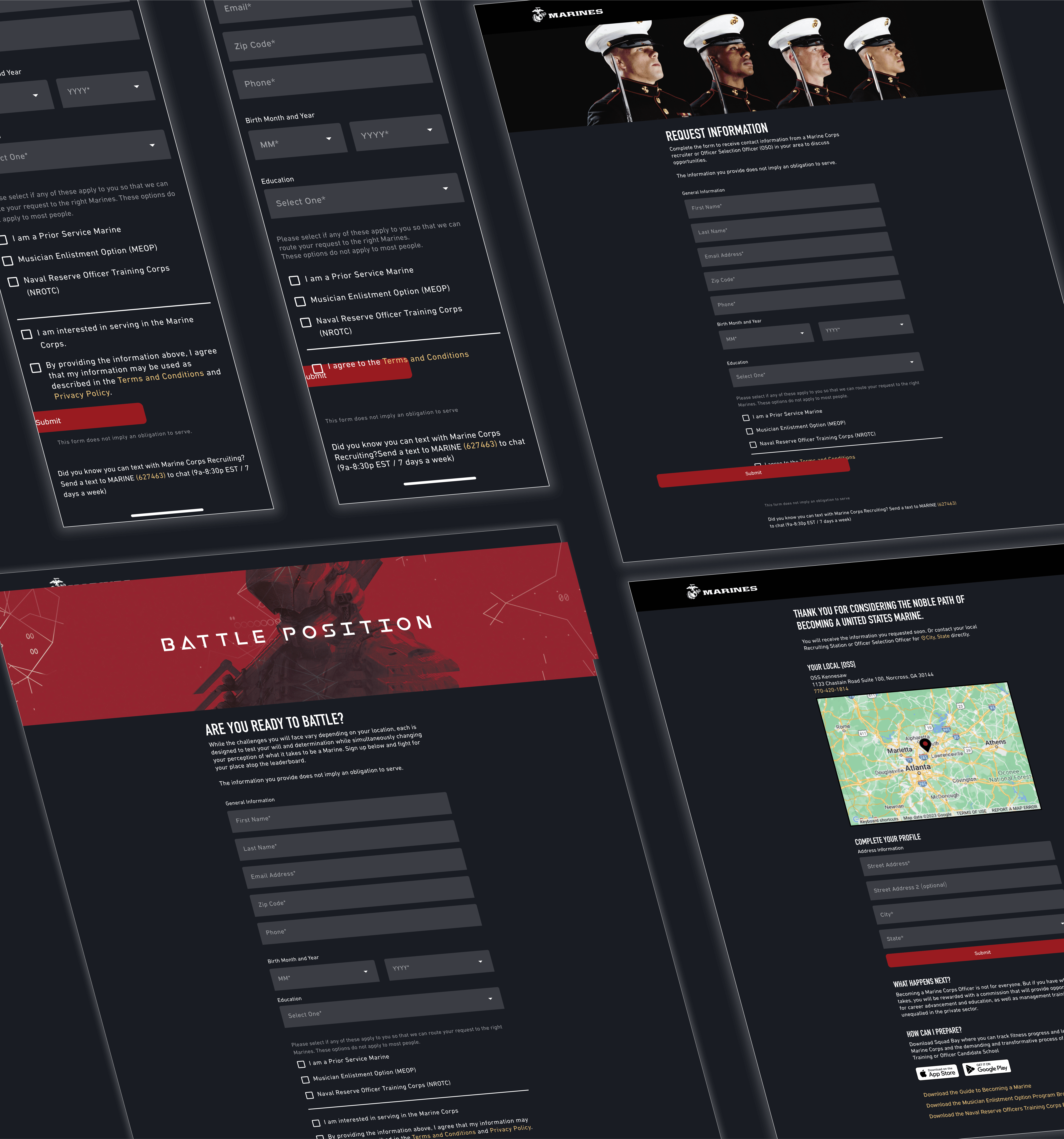
A Fragmented ecosystem absorbed into doctrine
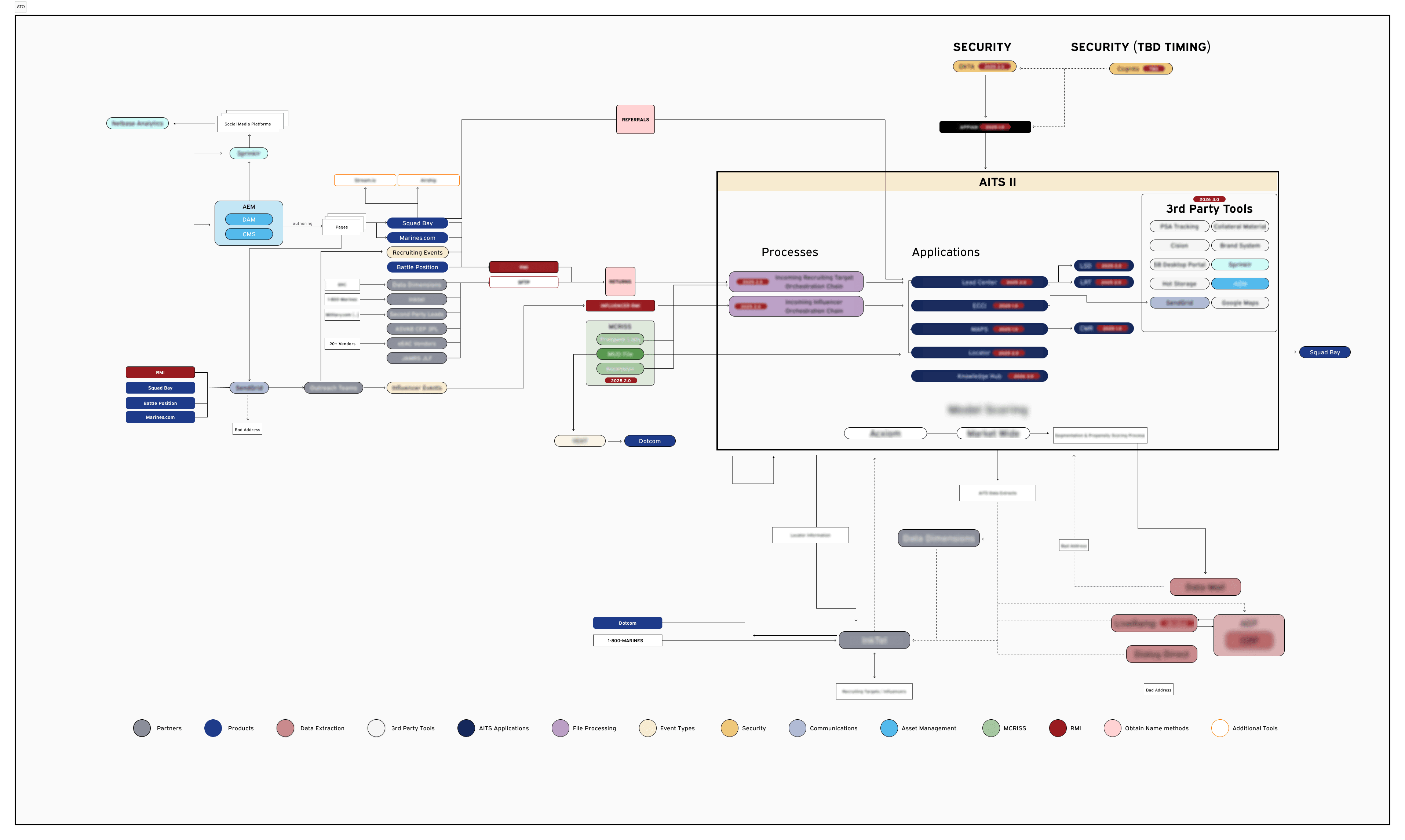
Over time, recruiting workflows were distributed across eight separate applications, each optimized in isolation. Oversight requirements embedded by doctrine added layers of review and exception handling, while system limitations pushed recruiters to rely on external tools and manual processes.
These adaptations preserved mission success but increased cognitive load, training time, and error risk. Any single application change had downstream effects across the ecosystem, making incremental fixes insufficient.
*items redacted for security
Role & Accountability
As Associate Director of Experience, I led product and experience strategy across the recruiting enterprise suite. My accountability extended beyond individual applications to how systems, teams, and workflows interacted as a whole.
I operated in a dual Product Owner and Experience Lead capacity—defining requirements, shaping workflows, prioritizing delivery, and aligning design, engineering, and stakeholders around shared system-level decisions.
My responsibility was not to redesign interfaces in isolation, but to reduce friction across the ecosystem while enabling teams to operate more independently over time.
Creating Alignment Without Slowing Delivery
With 8 different applications, it was important to make design decisions based on how users would interact with multiple applications in their workflow and not allow a singular application to decide how it should be interacted with.
This ensured that we did not create breaks in the experience, it also allowed entire teams to align on how use cases may differ between applications but functionality did not. This was difficult but it forced us to stay honest with how the rules apply when interacting with the eco-system.
Diagrammatic Thinking as a Leadership Tool
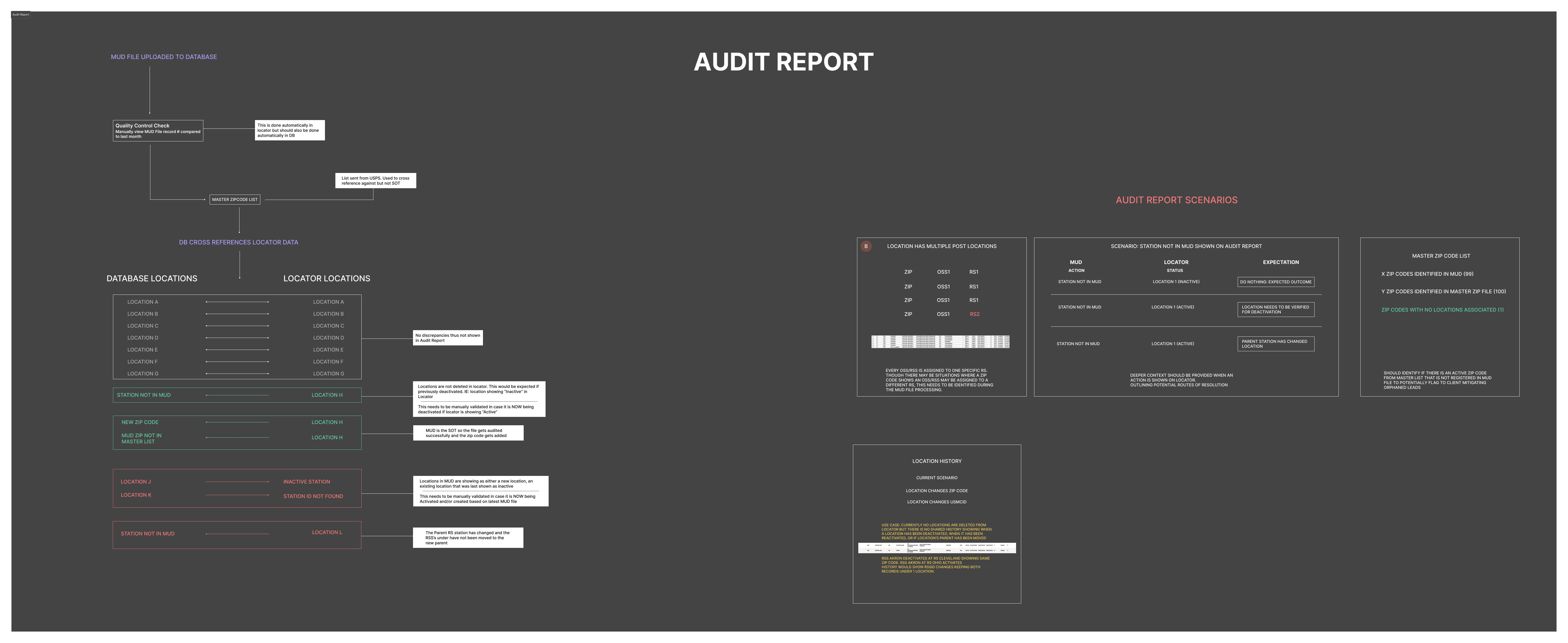
In environments with multiple stakeholders, polished artifacts introduce noise. Diagrams allowed teams to reason about structure, flow, and responsibility without distraction.
Diagrams flatten those lenses. We replace layered interpretations with shared clarity.
I use:
Boxes and arrows for flow and structure (familiar to military logic)
Color only when we need to differentiate objects or categories
No styling artifacts that could distract from the core idea
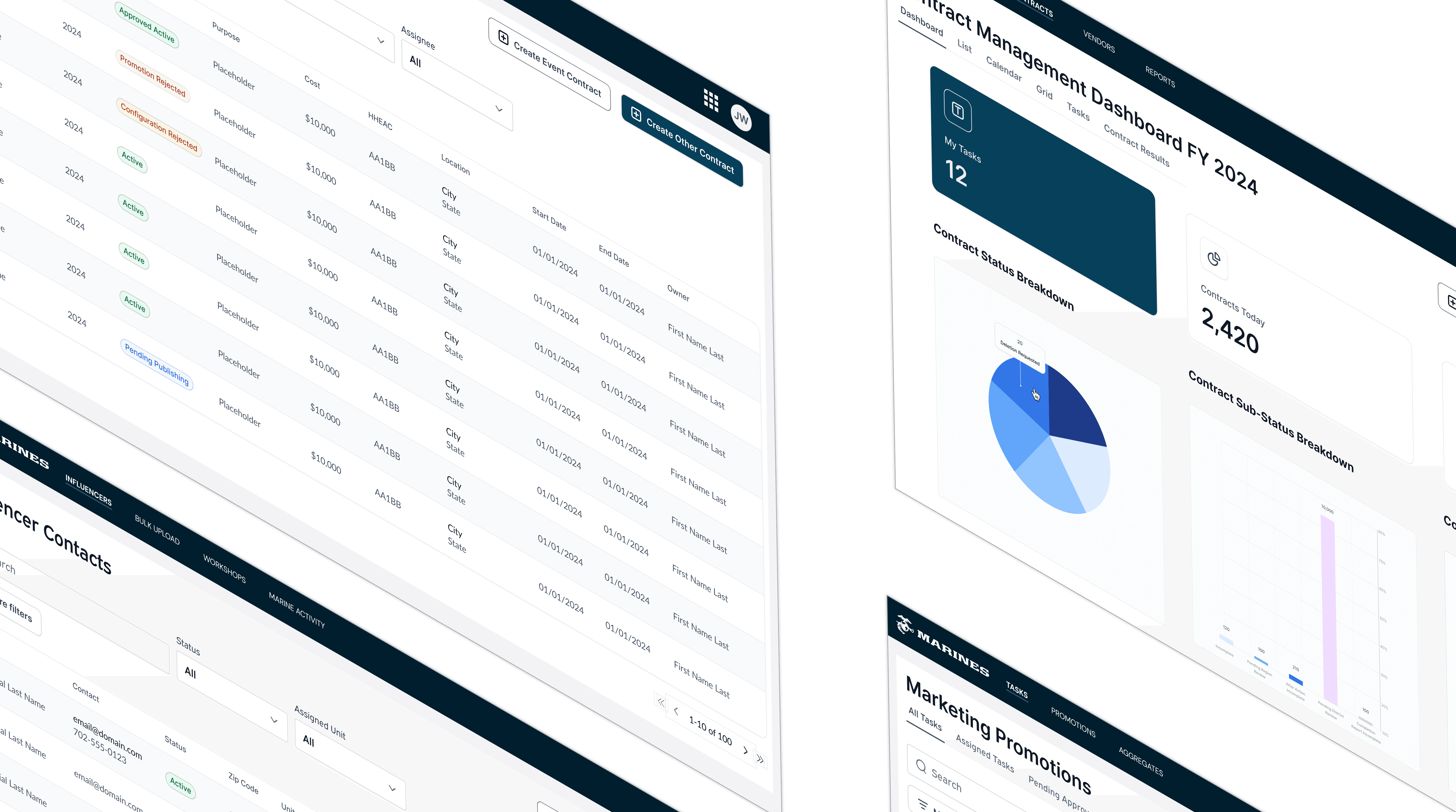
Experience Architecture Across Applications
Design decisions were based on how users moved across applications—not how individual tools wanted to behave. This prevented experience breaks and reduced relearning across the suite.
Cross-Domain Leadership in Practice
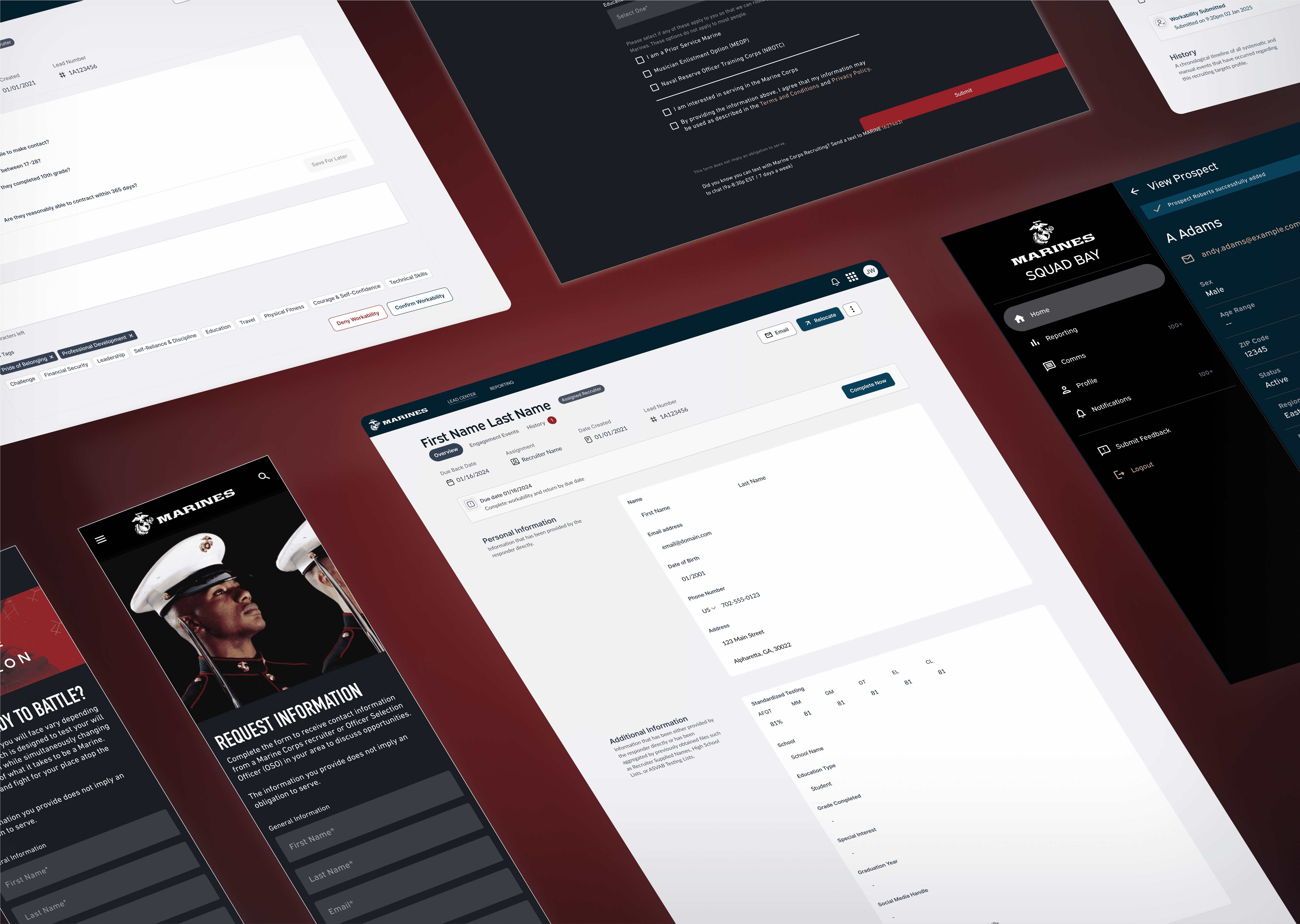
Enterprise mobile (SquadBay): Aligned UX and feature direction to prepare recruits for training without introducing parallel workflows.
Public-facing website: Provided design and strategic oversight, aligning Marines.com with evolving recruitment objectives and long-term planning.
Design system expansion: Scaled shared patterns across web, enterprise, and mobile surfaces to reduce fragmentation and delivery friction.
Data asset management: Led improvements to location and routing logic supporting 40,000+ records used across systems.
Cross-functional unblocker: Stepped in wherever misalignment surfaced to resolve ambiguity without creating dependency.
© JACKWILSONDESIGN
© 2024